Skip to content

Free written quotesLocal crews

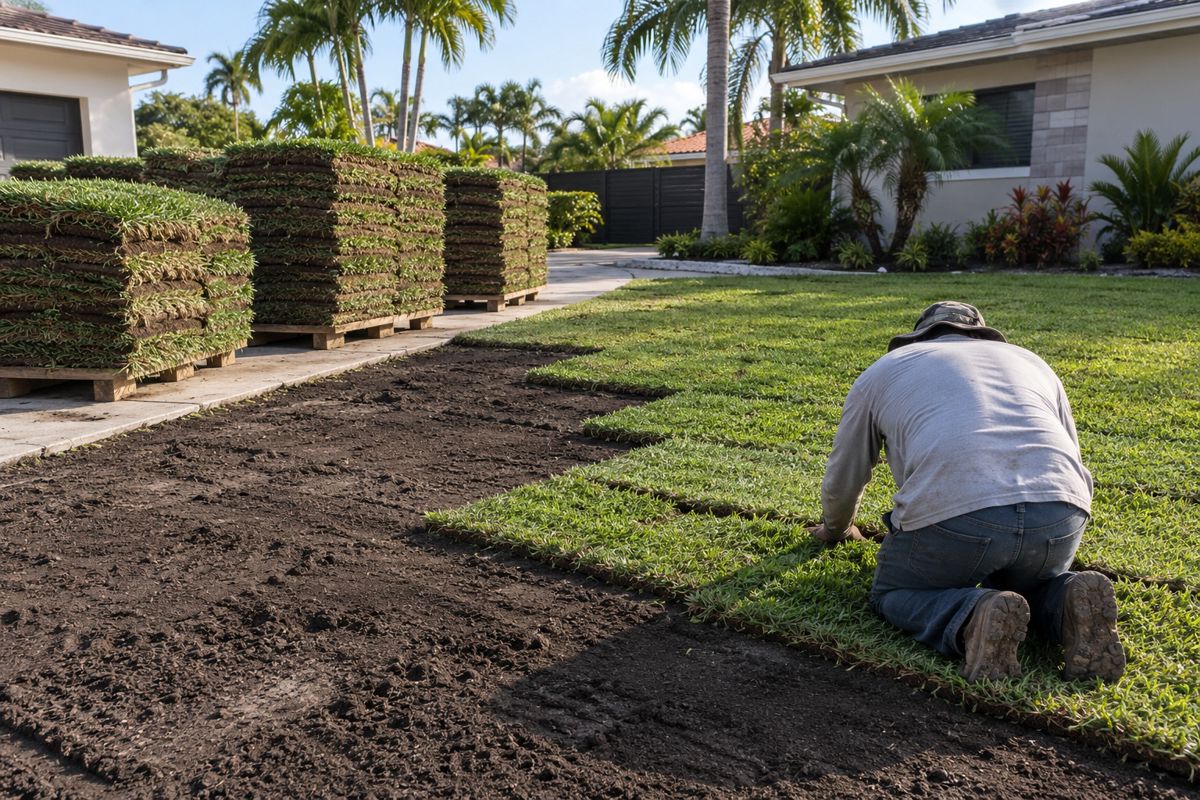
Worker laying rows of fresh St. Augustine sod beside stacked pallets

Sod in Hialeah, FL

Sod installation in Hialeah that roots well in limestone soil

Remove the failing lawn, prepare the ground and lay fresh sod matched to your sun, shade and water.

  • Grass type chosen for sun, shade and soil
  • Ground prepared and graded before sod goes down
  • Watering and mowing plan after install

Step 1 of 3

What do you need?

What is involved in sod installation in Hialeah?

Sod installation means more than rolling out grass. Sod installation in Hialeah follows a set order, and skipping a step is why many lawns fail within a season.

  1. Measure the area and check sun, shade and slopes
  2. Strip or kill the old lawn, weeds and debris
  3. Level the ground and fix low spots that hold water
  4. Add soil or compost where the ground is thin, since the native layer here is shallow
  5. Lay fresh sod in tight rows with staggered seams, then roll or press it for contact with the soil
  6. Water right away and set up a watering plan

New sod is alive and perishable. It should be cut, delivered and laid the same day as much as possible, because stacked pallets heat up in the Florida sun. Plan the delivery around your schedule, and keep the work area clear.

Which grass is right for a Hialeah lawn?

This is the first question in any lawn project, and it ties in with landscape design. The answer depends on light, use and the effort you want to put in. Many Hialeah lawns are St. Augustine, which handles heat and humidity and spreads on its own. Common types include:

  • St. Augustine - thick, coarse blades, popular across South Florida, with varieties that differ in shade tolerance and pest resistance
  • Zoysia - denser and finer, slower to establish, a good fit for smaller lawns that get steady care
  • Bahia - tough and lower in cost, handles poor soil and dry spells, but looks coarser and more open
  • Bermuda - fine texture, needs full sun and frequent mowing

Ask which named variety you are getting and where it grows well. No lawn grass thrives in deep shade. Under a big mango or along the north wall, mulch or a groundcover is a better answer than new sod.

Why does sod struggle on limestone-based soil?

The ground under much of Hialeah is limestone-based. It is alkaline, drains fast in some places and stays soggy in others, and it holds little organic matter. Grass can turn pale or yellow when high pH locks up iron and other nutrients. That is not always a sign of disease or poor care.

Preparation helps. Adding compost or good topsoil to a thin layer gives roots something to hold. Leveling prevents the puddles that rot sod in summer. Some lawns need targeted nutrient products, applied to label directions and local rules. Many Florida counties and cities limit lawn fertilizer during the summer rainy season, so check current rules before you feed a new lawn.

Pests are the other local issue. Chinch bugs, sod webworms and fungus show up in hot, wet weather. Spot problems early and treat what is actually there, not a guess. A county extension office can help identify a sample.

No two lawns cost the same. The main factors:

  • Square footage of the area and its shape
  • The grass variety, since some cost more than others
  • Removing old turf, roots and rubble
  • Grading, soil or compost, and fixing drainage
  • Access, because pallets carried by hand through a narrow side yard take longer than a truck at the curb
  • Whether irrigation needs repairs to cover the new area evenly

A cheaper quote can leave out ground preparation, which is the part that decides how long the lawn lasts. Ask exactly what is included. Partial patches cost less than full replacement, but they only make sense when the rest of the lawn is healthy. If weeds, grubs or bare soil cover most of the yard, starting fresh is often cleaner. If you plan a patio or beds as well, a combined plan can save digging. See our paver and hardscape work for how that fits.

How long does it take, and how do I care for new sod?

Laying sod on a typical small lot often takes a day or two once the ground is ready. Preparation takes extra time. On the day, expect a pallet delivery, a crew working quickly, and clear instructions on watering.

The first weeks decide the outcome. Keep the sod moist so it roots into the ground, check corners and edges that dry out first, and stay off it as much as you can. Watering rules still apply in Miami-Dade, with limits on days and hours, but new sod is often given extra allowance for a short period. Check the current local rules, because they can change. Sprinkler installation makes this easier because coverage is even.

Wait until the roots hold before the first mow, and cut high. Call when your lawn is more weeds than grass, when patches keep dying, or when you are redoing the yard. Browse the rest of our Hialeah landscaping services if you need more than sod.

How it works

  1. Tell us about the yard

    Size, goals and any photos.

  2. Site visit and quote

    We walk the property and put the price in writing.

  3. We do the work

    Scheduled crew, cleanup included.

Free written quotes
Local crews
Reliable scheduling
Tidy job sites

Request sod installation

Tell us what you need and we call you back.

No obligation.

Step 1 of 3

What do you need?

Questions about landscaping in Hialeah

When can I install sod in Hialeah?

Sod can go down much of the year because frost is rare. The rainy season helps new roots, but heavy storms can wash out soft ground. The dry season needs more watering. Avoid laying sod just before a named storm or a rare cold snap. The ground should be prepared and the watering plan ready on the day.

Can new sod go over my old lawn?

No. Old grass, weeds and roots under new sod stop it from rooting and leave lumps and weak spots. The old lawn should be removed or killed and cleared first. The soil is then leveled and smoothed. This step takes time but it is the main reason some new lawns last and others fail.

How soon can we walk on new sod?

Keep traffic light for the first couple of weeks while the roots grip the soil. Walk on it only when needed, and keep pets and kids off if possible. When you cannot lift a corner by hand, the sod has rooted and normal use can start slowly. Wait until then for the first mow.

How much water does new sod need?

It needs to stay moist, not soaked, until it roots. That usually means short, frequent cycles at first, then less often as the roots grow. Local watering restrictions may still apply, though new plantings often get an establishment allowance. Check the current rules for your address and adjust for rain.

Will St. Augustine grow in shade?

Some varieties tolerate partial shade better than others, but none do well in deep shade. If an area gets only a few hours of sun, expect thin grass. Mulch, groundcovers or a stepping-stone path may work better under dense trees. Ask the supplier which variety suits the light in your yard.

Why is my new sod turning yellow?

Common causes are too little water, too much water, poor contact with the soil, high soil pH locking up iron, or chinch bugs. Check the soil moisture and look closely at the blades and thatch before you treat anything. A county extension office can help identify the cause. Fix the cause, not the color.

Ready when you are

Call now or request a quote online.

(305) 555-0164