
Skip to content

Free written quotesLocal crews

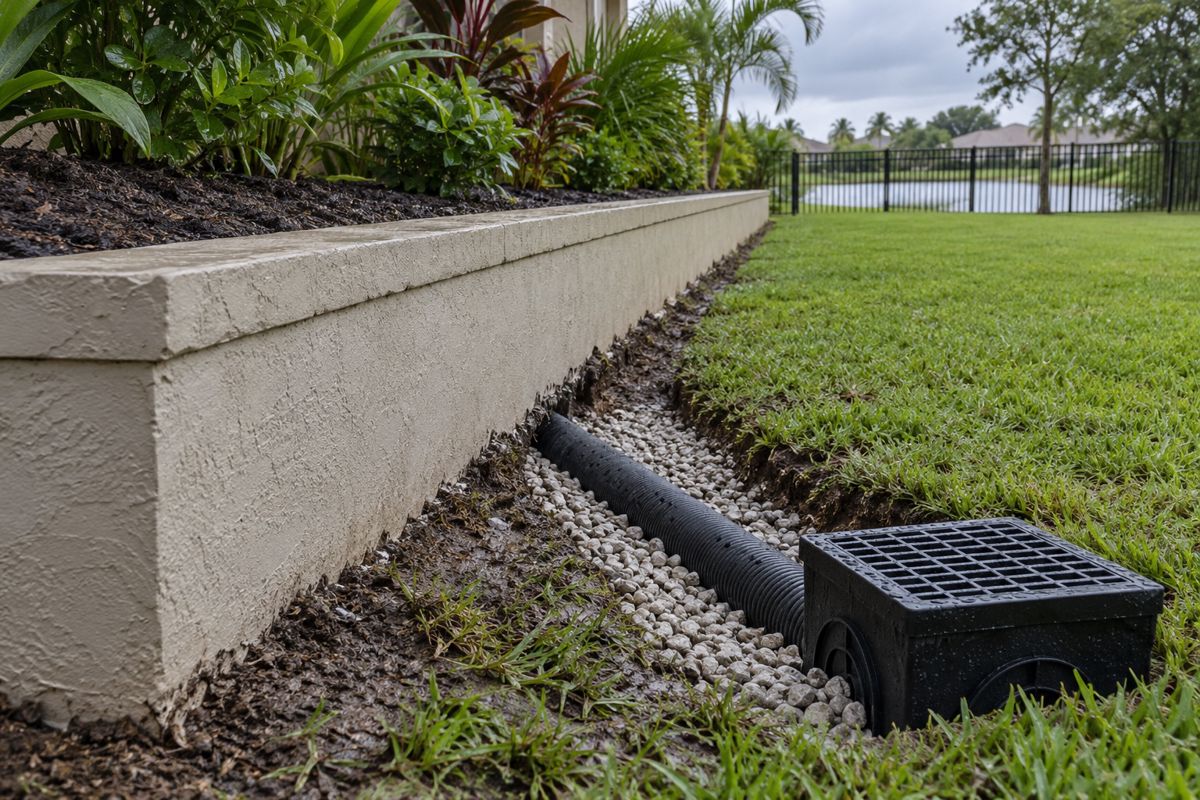
Low block retaining wall with raised bed and gravel drain trench in lawn

Walls and drainage in Hialeah, FL

Retaining wall contractor in Hialeah for walls and drainage fixes

Hialeah is flat, so water is the bigger problem. Walls and drains are planned together.

  • Raised beds, planters and level changes
  • Drains, swales and dry wells for standing water
  • Scope and quote in writing

Step 1 of 3

What do you need?

Does a flat city like Hialeah need retaining walls?

Hialeah has almost no hills, so you will not see tall slope walls here. A retaining wall contractor in Hialeah is more often asked for smaller jobs: a raised planter bed along the house, a wall where fill was added to lift part of the yard, a step between the patio and the lawn, or support along a canal bank, a lake edge or a pool deck. Walls also hold soil back where one lot sits higher than the next.

Many local walls are low, from knee to waist height. They look simple, but they still need a proper footing, a compacted base and a way for water to get out. A wall that traps water behind it will lean, crack or bulge, no matter how good it looks on day one.

What causes drainage problems in Hialeah yards?

Water is the real issue in this area. The land is flat and low, summer storms can drop heavy rain in a short time, and the water table sits close to the surface for much of the year. Add compacted soil and paved lots, and rain has nowhere to go.

Common signs of trouble

  • Puddles that stay for a day or more after rain
  • Water pooling against the house, a garage door or a patio
  • Dead or yellowing grass in the low part of the lawn
  • Mulch and soil washing out of beds
  • Swales along the street that are filled in, planted over or blocked by a driveway

The swale is a shallow strip between the street and the lot that is meant to carry and soak up rain. Filling it in or regrading it can send water onto your own lot or a neighbor's, so check local rules before changing it.

How do you fix standing water without making it worse?

The answer depends on where the water comes from and where it can go. The first step is watching the flow: where roof gutters discharge, which way the ground slopes, and which low spot collects water. Then the fix is matched to the problem.

  • Regrading to move water away from the house and toward a lawn or bed
  • Catch basins and pipe to collect water from a low spot and carry it to a safe outlet
  • French drains for soggy strips, though a shallow water table can limit how well they work
  • Dry wells or soak pits where the limestone below drains well, subject to local rules
  • Downspout extensions that carry roof water well away from the foundation

Moving water onto a neighbor's lot is not an option and often breaks local rules. A good plan keeps runoff on your own property or sends it to an approved outlet. Heavy storms can still overwhelm any system, so the goal is faster drainage and less damage, not a promise that water will never stand.

Walls and drains are priced by the details, and no honest number is possible without seeing the yard. Price usually depends on:

  • Wall length and height, since cost rises quickly with height
  • Material, such as concrete block with stucco, segmental block, natural stone or poured concrete
  • Footing depth, reinforcing steel and the amount of drainage rock behind the wall
  • Engineering and permits for walls above a certain height or near a structure
  • Digging, hauling soil and access for machines
  • Pipe length, number of catch basins and where the outlet is

Skip untreated wood in this climate. Moisture, termites and rot shorten its life. Ask what the wall is made of and how water will leave it. Walls and drainage often pair with new sod or a full design plan, so it helps to plan them together.

How long does it take, and what about permits?

A small raised bed or low wall can be done in a few days. Longer walls, engineered walls and drainage systems with pipe and basins take more time, and rain can stop the digging. On the day, expect excavation, a delivery of block or stone, a compactor and some noise. Mark any irrigation lines or utilities you know about. Utilities are normally located through the Florida one-call service before major digging.

Walls above a modest height usually need a permit and sometimes engineered plans. Work near canals, lakes or the street right-of-way may involve the city, the county or a water management agency. Ask the City of Hialeah or Miami-Dade County what applies.

Call when water stands after rain, when soil is washing into the street, or when you want a raised bed or step that looks finished. You can also see the other work on the Hialeah Landscaping home page.

How it works

  1. Tell us about the yard

    Size, goals and any photos.

  2. Site visit and quote

    We walk the property and put the price in writing.

  3. We do the work

    Scheduled crew, cleanup included.

Free written quotes
Local crews
Reliable scheduling
Tidy job sites

Request retaining walls

Tell us what you need and we call you back.

No obligation.

Step 1 of 3

What do you need?

Questions about landscaping in Hialeah

How tall can a wall be before it needs a permit?

The height limit differs by place and by wall type, and walls near buildings, pools, property lines or water are treated more strictly. Many low garden walls need no engineering, but taller ones usually do. Ask the City of Hialeah or Miami-Dade County before you plan the wall, and ask the contractor who pulls the permit.

Will a French drain work with a high water table?

It can help with surface runoff and soggy ground, but a drain cannot empty water that has nowhere to go. If the water table is high, the drain needs an outlet that sits lower, such as a catch basin, a swale or an approved connection. Otherwise it fills and stays full. Site conditions decide the answer.

Why does water collect by my house after storms?

Common causes are ground that slopes toward the wall, downspouts that empty at the foundation, a swale that was filled in, or soil that settled over time. Water also stays where the soil is compacted. A look at how rain moves across the yard usually points to the cause and a simple first fix.

Can a leaning wall be fixed?

Sometimes a small lean can be corrected by improving drainage and rebuilding the top courses. Often a wall that has moved needs to be taken down and rebuilt with a proper footing, drainage rock and weep holes. Pushing it back rarely works, because the cause, usually trapped water or a weak base, is still there.

Do walls need weep holes or drainage rock?

Most solid walls do. Water builds up behind them in heavy rain, and the pressure can crack or tip the wall. Weep holes, a gravel backfill and a drain pipe give water a path out. Some block systems are designed to drain through the joints. Ask how the wall you are quoted will handle water.

Can I plant on a raised bed wall?

Yes, and raised beds are popular for herbs, flowers and small shrubs. Keep tree roots away from the wall, and choose plants that will not outgrow the space. A raised bed also needs a drain at the bottom and a way to water it, or it can dry out quickly in the Florida sun.

Ready when you are

Call now or request a quote online.

(305) 555-0164