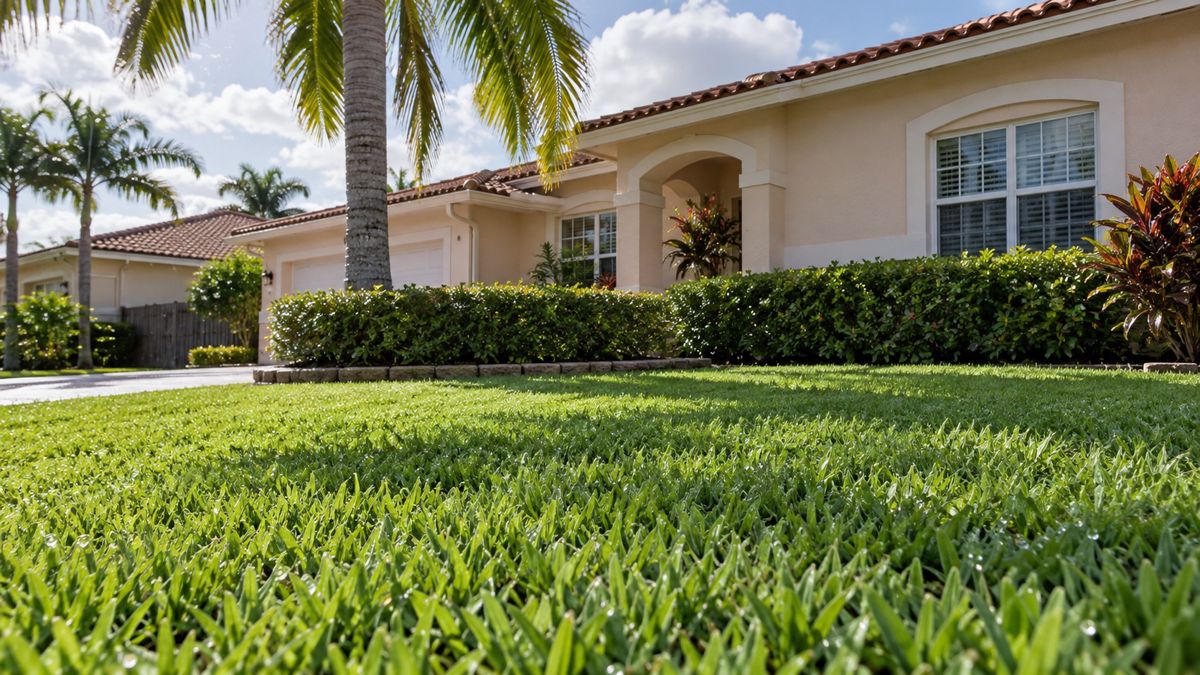
For most Hialeah lawns that get plenty of sun, St. Augustine is the safe choice. Zoysia suits owners who want a denser, finer lawn and will keep up with the care it needs. Bahia is a tough, low-cost option for poor soil and dry spells, though it looks coarser. Your sun, soil and routine decide which one fits, and this guide walks through each factor in plain terms.
What makes Hialeah a hard place to grow grass?
Hialeah has hot, humid weather for most of the year, a heavy rainy season and almost no frost. Those conditions suit grass growth, but they also suit pests and fungus. The ground adds its own challenge.
- Limestone-based soil. It is shallow, alkaline and low in organic matter. High pH can lock up iron, so some grass turns pale even when it is watered on schedule.
- Flat land and a high water table. Low spots hold water after storms, and roots can rot if the water stays.
- Small lots. Shade from a neighbor's tree, a block wall or your own mango can change the light across a few feet of lawn.
- Water rules. Local limits on watering days and hours mean you cannot simply water more to fix a weak lawn.
Choosing a grass that fits these limits is easier than fighting them.
Is St. Augustine the right grass for most Hialeah yards?
St. Augustine is the most common lawn grass across South Florida, and for good reasons. It tolerates heat and humidity, spreads by runners to fill gaps, and forms a thick mat that crowds out many weeds. It is sold as sod, since growing it from seed is not practical.
Varieties differ
Not all St. Augustine is the same. Floratam is a coarse, vigorous type that grows well in full sun but tolerates less shade. Palmetto and Seville have a finer leaf and usually handle partial shade better. Newer named varieties keep appearing. Ask the sod supplier which variety is on the pallet and where it performs well in South Florida.
Where it struggles
St. Augustine is hurt by chinch bugs, which show up as dry, yellow patches in hot weather, and it can develop fungus when it stays wet at night. It does not like heavy foot traffic. Cut it high, around 3.5 to 4 inches, since short mowing weakens it. In deep shade it thins out no matter the variety.
How do zoysia, bahia and bermuda compare?
If St. Augustine is not a fit, three other grasses are common in the area.
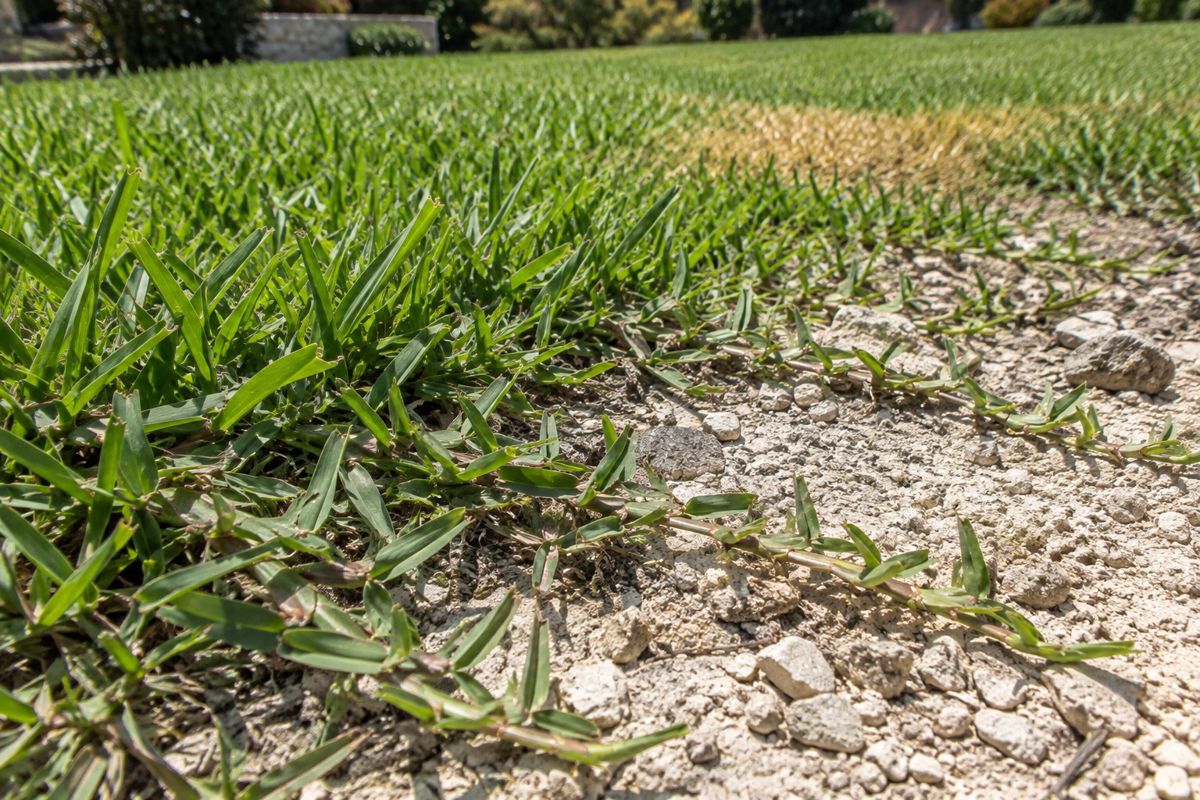
- Zoysia has a fine, dense blade and a smooth, carpet-like look. It handles some shade better than bermuda and wears well. It grows slowly, so it takes longer to fill in and usually costs more to establish.
- Bahia has a deep root system, copes with poor soil and dry periods, and usually costs less. The blades are coarse, the lawn looks looser, and it sends up seed heads that need regular mowing.
- Bermuda has a fine texture, recovers quickly and stands up to play. It needs full sun all day and frequent mowing, and it does poorly under trees.
Centipede grass is sold in Florida too, but it prefers acidic soil and does not like the high pH common on limestone, so it is rarely a good match here. Ask a local supplier before you pick a type just because it is on offer.
A common mistake is choosing by looks. A fine, dark lawn is great in a photo, but the right grass is the one that survives your shade, your soil and your schedule.
How much sun and shade does your lawn get?
Walk the yard at three times of day, morning, noon and late afternoon, and note which parts get at least six hours of direct sun. That is the usual minimum for most lawn grasses. Bermuda and Floratam want the most sun. Zoysia and the finer St. Augustine types cope with a little less.
In areas that stay shaded most of the day, such as the north side of a house or under a dense mango or avocado canopy, no turf thrives for long. Consider mulch, shade-tolerant groundcovers or a paved path instead of fighting for grass there. Planning that mix is part of our landscape design work, and it often saves money compared with replacing sod again and again.
Also think about use. If kids and dogs run across the yard every day, favor a hardy grass and plan stepping stones along the worn lines.
How should you prepare the ground before sod goes down?
Preparation decides how long the lawn lasts. A typical sequence looks like this:
- Remove the old lawn, weeds and debris, or kill them first and clear the dead material.
- Check the grade. Fill low spots that hold water and make sure the ground slopes away from the house.
- Add compost or clean topsoil where the native layer is thin, and rake the surface smooth.
- Check or install irrigation before sod goes down so new lines do not tear it up later. Our sprinkler installation page explains zones.
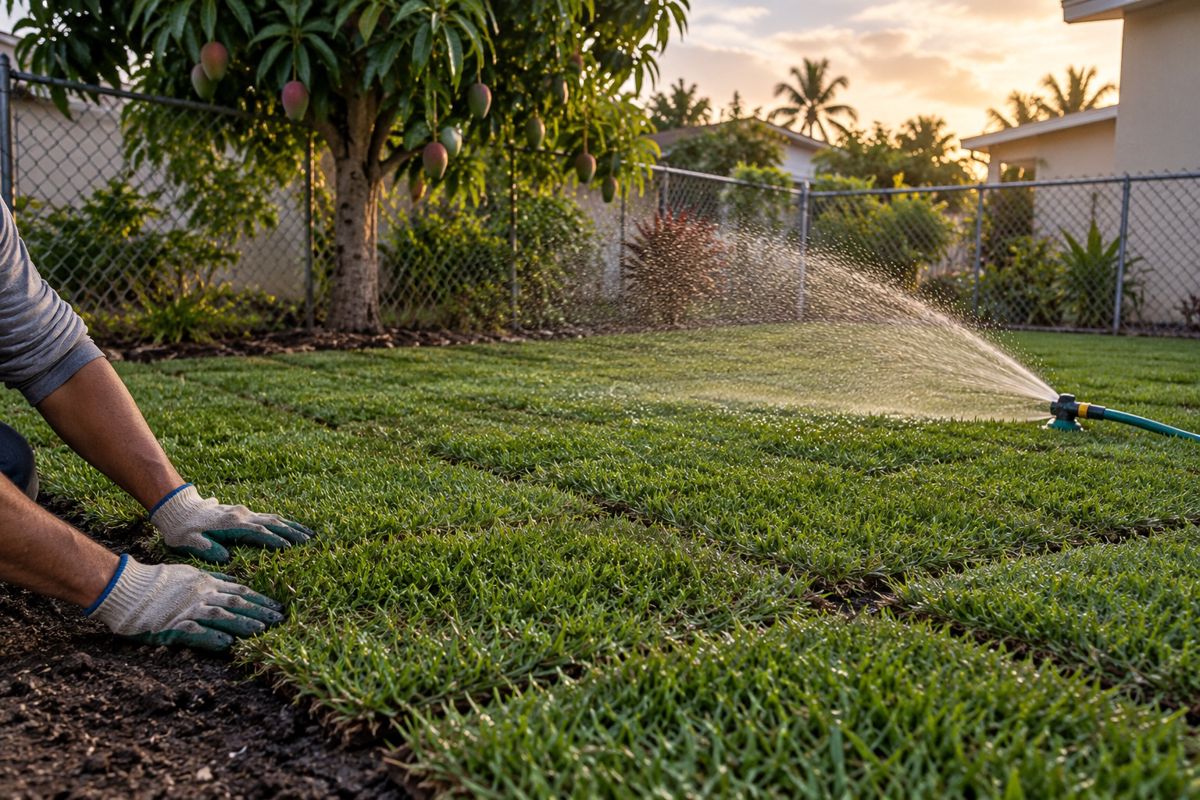
- Lay the sod the day it arrives, in tight rows with staggered seams, and press it against the soil.
Cost depends on area, grass type, removal of the old lawn, grading, soil, drainage and access for pallets. We do not give prices in articles because they change with the market and the yard. Cheap quotes often leave out preparation, so ask what is included.
What does new sod need in the first weeks?
Water is the biggest factor. New sod has no roots in the ground yet, so it dries out fast in Florida sun. Keep it moist, not soaked, and check the edges and corners, which dry first. Local watering restrictions still apply, though new plantings often get a short establishment period with extra allowance. Check current rules for your address.
Keep off the lawn as much as you can. Wait until you cannot lift a corner by hand before the first mow, and mow at a high setting with a sharp blade. Hold off on fertilizer until the lawn is rooted, and check local rules, since many South Florida areas limit lawn fertilizer during the summer rainy season. Watch for chinch bugs and fungus in hot, wet spells, and identify the problem before you spray anything.
When should you call a landscaper about sod?
Call before you buy if you are unsure which grass fits, if low spots keep flooding, or if your lawn is mostly weeds. A look at the yard shows light, soil and water in minutes, and a written quote lists what is included. Read more about sod installation in Hialeah, or see how it fits with drainage fixes when water is the real culprit.